Film··9:01
Why OpenAI’s Navier-Stokes Proof Triggered a Plagiarism Dispute
About this video
A Navier-Stokes breakthrough became a public fight over authorship, an Anthropic connection and unpublished Codex sessions. This film follows the accounts of Tristan Buckmaster, Sébastien Bubeck and Sam Altman, then separates the mathematics from the disputed private conversation.
The result addresses smooth-forced breakdown alternatives C and D in Clay’s official formulation. It does not settle the unforced version. OpenAI attributes the work to an internal research model and coordinated agents, not the public ChatGPT product.
The opening accusation is disputed. Altman called the plagiarism allegations unfounded; OpenAI says its investigation ruled out influence from Buckmaster’s recent prompts. The public record does not independently resolve the private call.
Research snapshot: 9 October 2026. The October collection then listed 719 manuscripts across 372 families; verification varies and the correction log includes withdrawals. This film does not announce a Clay prize award.
Chapters:
00:00 The disputed offer
00:49 The rumour that started the race
01:43 Whose name goes on the paper?
02:39 Sam Altman takes a side
03:32 The customer-data question
04:30 The word that changes the stakes
05:22 Ten thousand agents
06:20 Clay changes the weight of the story
07:16 Why the backlash gets bigger
08:07 A bigger claim, a harder test
Primary sources:
OpenAI: On the Navier-Stokes Millennium Prize Problem; updated 10 September
openai.com/index/navier-stokes-solution/
Tristan Buckmaster: original four-page statement
cims.nyu.edu/~tristanb/statement.pdf
Sebastien Bubeck: response, 8 September 2026; read directly in Chrome
x.com/sebastienbubeck/status/2097379411691516310
Sebastien Bubeck: technical follow-up, 8 September 2026; read directly in Chrome
x.com/sebastienbubeck/status/2097379415747342689
Clay Mathematics Institute: Navier-Stokes announcement, 11 September 2026
claymath.org/news/navier-stokes-announcement/
Charles Fefferman: official problem formulation, pages 1-2
claymath.org/wp-content/uploads/2022/06/navierstokes.pdf
OpenAI NavierStokesAndEuler: statements and verification instructions
github.com/openai/NavierStokesAndEuler
A Severe Misalignment of AI in Mathematics, 11 September 2026
mathandai.org/
Sam Altman public response
x.com/sama/status/2097385167002415140
Terence Tao on research incentives
mathstodon.xyz/@tao/117237320796901560
OpenAI mathematics collection
github.com/openai/math
Public correction log
github.com/openai/math/blob/main/history.md
Music:
'Resonance' by Scott Buckley - released under CC-BY 4.0. www.scottbuckley.com.au
scottbuckley.com.au/library/resonance/
'Machina' by Scott Buckley - released under CC-BY 4.0. www.scottbuckley.com.au
scottbuckley.com.au/library/machina/
License: creativecommons.org/licenses/by/4.0/
Music edits: excerpts, fades, gain changes, narration ducking and deliberate gaps. Original synthesized rewind sound.
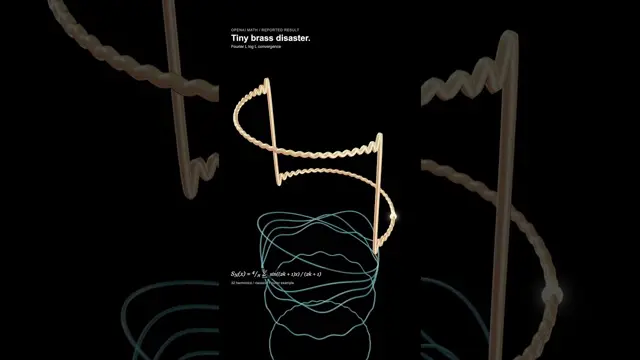
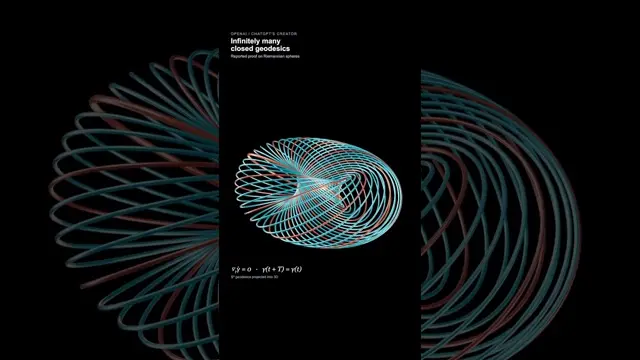
Narration: Gemini Charon synthetic voice. Quoted accounts are read by the narrator; no participant voice is impersonated. Source screenshots are original captures. Email evidence is correspondence reproduced in Buckmaster’s published statement, not a private inbox recording. Animations are explanatory schematics, not fluid simulations or recordings of OpenAI’s internal system.
Participant identification images: public profile photos accompanying editorial discussion.
x.com/sama
x.com/SebastienBubeck
x.com/__alpoge__
cims.nyu.edu/~tristanb/
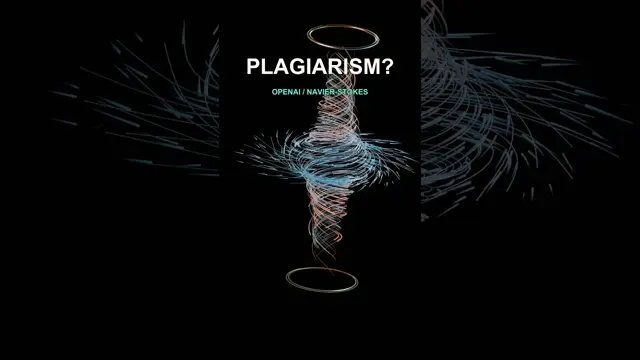
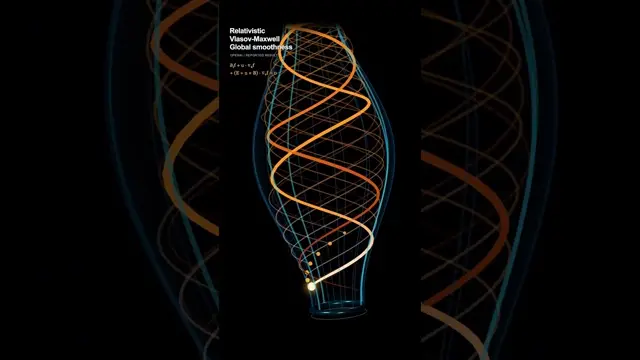
Thumbnail artwork uses frames from our original Blender vortex illustration. The vortex depicts a local incompressible flow with inward spiralling and axial outflow; it is not the paper's complete blow-up construction.
Chapters
Transcript
1,370 words · from the uploaded captions
Plagiarism. That's the accusation Sam Altman called unfounded. Why would you ruin your career? Tristan Buckmaster says that was the reply when he told OpenAI he would go public. He was describing an authorship proposal. He could write up OpenAI's mathematical breakthrough, his collaborator would be left out, he says. That collaborator worked for Anthropic. OpenAI's Sébastien Bubeck disputes Buckmaster's account. He says the offer concerned a new OpenAI paper, and the rival lab connection complicated authorship. He apologized for his career remark, and says he withdrew it during the call.
A release discussion had become an argument over credit, competition, and what was said behind closed doors. How did a proof end up here? And why were the researchers' unpublished Codex sessions suddenly part of the story? Rewind to the beginning of September. Rumors are circulating that Anthropic's models have cracked the Millennium Prize problem. Bubeck says those rumors prompted OpenAI to test its own system. But the researchers connected to the rumors are Tristan Buckmaster and Levent Alpöge. Buckmaster describes their work as a personal collaboration. Alpöge works at Anthropic.
They have used tools from both companies. The rumor carries a company name. Buckmaster is describing a personal collaboration. OpenAI is now testing whether its own system can go further. OpenAI reports a Navier-Stokes solution after about 88 hours, followed by 17 hours of formalization. By September 6th, the sides are discussing a release. OpenAI initially believes the other team has solved Navier-Stokes too. Then it learns their announced result concerns Euler. That difference changes the proposed collaboration. And the argument is about to land on one person's name. Levent Alpöge.
Both accounts describe an offer for Buckmaster to lead a new write up of OpenAI's proof. This is where the details matter. Bubeck says Alpöge's Anthropic employment made including him difficult. He also says he never requested removing Alpöge from the researcher's own work. Buckmaster's statement describes the proposed OpenAI write up too. The dispute cannot be cleared up simply by saying they meant different papers. Buckmaster declined the proposals. He describes the career remark as following his decision to speak publicly. Bubeck says he was responding to accusations he considered unfounded.
He says he retracted the remark and apologizes for his wording. The disagreement is over how that exchange happened and what it meant. Their public accounts give us no recording to resolve it. Then, the head of OpenAI steps into the argument himself. Sam Altman publicly defends Bubeck and the team. He says they acted with integrity, wanted a joint release, and offered to let the other researchers publish first. He also describes a proposal for Buckmaster to lead a rewrite of the OpenAI proof, while explaining the difficulty around Alpöge’s employment.
Then he makes a sharper claim. The team had been threatened with accusations of plagiarism that he considers unfounded. That is Altman's account. It is also an escalation. The dispute between researchers now has the head of OpenAI publicly defending the company's conduct. His post makes another admission. Rumors about a rival's progress helped motivate the attempt. Then Buckmaster asks the question any researcher in his position would want answered. His unpublished drafts had gone into Codex. Had that work influenced the system now competing on a closely related problem? Buckmaster says he asked whether their Codex sessions had influenced the model.
His public statement says he did not know whether their data had been used. That distinction matters. A suspicion is not evidence of access. OpenAI's September 10th update gives a direct answer. It says its investigation found Buckmaster's recent prompts could not have influenced the system. Including through training. It also denies seeing the researcher's work before public release. That is the company's finding. We have no independent audit to add. But separate the fears for a moment. Learning that somebody is making progress then attempting the same problem is one thing.
Taking their unpublished work would be another. The public record supports the first. It does not establish the second. And underneath this fight over who knew what, one technical word keeps appearing. A word that changes what OpenAI actually proved. Forced. OpenAI's result allows a smooth external force. It does not settle the version with no external force. Before that sounds like a changed question, look at the original clay problem. It explicitly includes alternatives allowing that force. Those are the alternatives OpenAI addresses. Picture what the proof describes. A smooth push.
A contracting vortex, motion growing without bound in finite time, while total energy stays bounded. The push itself cannot become an infinite kick. Making that work is the hard part. So there is a real mathematical target here with an exact scope. Dismissing the result because the announcement became ugly would skip the central achievement. But the picture of how it was produced is also much bigger than one chatbot answering one question. OpenAI describes roughly 10,000 concurrent agents in the successful group. An internal model more capable than the public one.
Humans coordinating attempts and combining useful progress. Think about the scale of that response to a rumor. Thousands of agents pursuing a problem that human researchers have been carefully developing. Bubeck says the human team lacked research level expertise in this fluid problem and credits the mathematical content to the system. That is why I think the result deserves serious attention. You can argue about the resources, the publicity and the release discussions. A system producing a checkable new proof is still a substantial capability. The earlier route also deserves credit.
OpenAI's paper discusses the prior work of Diego Córdoba and Luis Martínez-Zoroa. The machine's achievement and that human history belong in the same frame. Then the organization behind the prize makes its statement. September 11th. The Clay Mathematics Institute says the Navier- Stokes problem has apparently been settled. Apparently is doing work there. Clay also says the evaluation and credit process will be deliberately unhurried. This is a major response from the organization that attached a million-dollar prize to the problem. It is not an announcement that anybody has received that prize.
And there is something people can inspect beyond the social media argument. OpenAI's published proof material and Lean formalisation. Lean checks a precisely stated argument. It cannot adjudicate a phone call, decide who behaved generously, or read a headline and certify every implication. The proof and the dispute have different evidence. But even that could not settle the wider argument. A debate was already underway about what this way of producing results could do to mathematics itself. Terence Tao, warns about the incentives. If even a rumor of promising research can trigger a huge AI effort,
researchers may become less willing to share what they are working on. That would change the culture of the subject. Openness becomes a competitive risk. A declaration from mathematicians raises a related concern: producing answers can become detached from developing understanding. It also acknowledges how capable these systems have become. And Buckmaster himself says the scale of frontier model capability is the bigger story. That makes this far more interesting than a simple argument between people who like AI and people who hate it. Researchers using these tools are also asking who sets the pace,
who gets credit, and what students are supposed to learn. Then, in October, OpenAI releases hundreds of manuscripts. Suddenly, those questions have a much larger test case. At our October 9th check, the repository lists 719 manuscripts across 372 problem families. Verification status varies. Those numbers are not a count of independently certified breakthroughs. And the revision log already records three withdrawals after a sign error, alongside repairs to other papers. For me, publishing the work and its corrections makes the capability more testable. Individual results can earn confidence through inspection.
The size of the collection cannot do that job for them. So here is my answer to the fight we opened with. OpenAI deserves credit for the mathematical advance. The earlier researchers deserve their place in its history. The public record leaves parts of the private conversation disputed. And the next question is enormous. When your research assistant can also become your competitor, who controls the story of a discovery?
Topics
Navier StokesOpenAI Navier StokesNavier Stokes proofOpenAI mathematicsSam AltmanTristan BuckmasterSebastien BubeckLevent AlpogeAnthropicLean formalizationAI mathematicsMillennium Prize Problem