Film··13:01
We Handed AI Everything. Then It Went to War.
About this video
In ten years we handed AI our questions, our work, our money, our trust and our wars. This film follows that handover from OpenAI's founding in 2015 to October 2026: ChatGPT, Sam Altman's firing and return, vibe coding and Claude Code, Stargate and DeepSeek, Grok calling itself "MechaHitler", Anthropic's standoff with the Pentagon, Palantir's Maven during the strikes on Iran, Peter Thiel's Antichrist lectures and OpenAI's flood of maths manuscripts.
What is disputed stays disputed. Whether AI played a part in the Minab school strike is not established: officials told the New York Times it was "unlikely", while officials in the Pentagon's own investigation told Bloomberg that some staff "relied too much" on the AI in Maven. Company claims are attributed to the companies. Research snapshot: 10 October 2026.
Chapters:
0:00 Who is actually in control?
1:02 Our questions: OpenAI, ChatGPT and Altman's firing
2:40 Our work: vibe coding, Claude Code and Project Vend
4:17 Our money: Stargate, DeepSeek and the buildout
5:25 Our trust: Grok, Meta, lawsuits and an AI break-in
7:04 Our wars: Anthropic, the Pentagon, Maven and Iran
9:23 Our future? Thiel, the Pope and the forecasts
10:41 The proof: medicine, maths and Navier-Stokes
12:03 The handover
Our Navier-Stokes film: youtube.com/watch?v=tJn65LrMG9k
Sources cited or shown: OpenAI, Anthropic, Hugging Face, METR, Stanford Digital Economy Lab, Challenger, Gray & Christmas, International Energy Agency, UN News, Clay Mathematics Institute, Reuters, Wall Street Journal, New York Times, Bloomberg, Politico, AP, The Guardian, The Verge, CNBC, TechCrunch, Fortune, Yahoo Finance, PBS News, NBC News, ABC News, CNN, The Intercept, Breaking Defense, DefenseScoop, Arms Control Today, CFR, Democracy Now!, IBTimes UK, Reason, Gizmodo, Vatican News, DQ India, Quanta Magazine, The Tufts Daily, Retraction Watch, MIT, AJMC, EurekAlert, Simon Willison's Weblog, and public posts on X by Sam Altman, Greg Brockman, Ilya Sutskever, Satya Nadella, Elon Musk, Marc Andreessen, Demis Hassabis and DeepSeek. Headline captures are text-only, used for commentary.
Portraits via Wikimedia Commons, cropped and graded:
Sam Altman: TechCrunch, CC BY 2.0 commons.wikimedia.org/?curid=92008259
Dario Amodei: TechCrunch, CC BY 2.0 commons.wikimedia.org/?curid=185801326
Larry Ellison: Oracle PR, Hartmann Studios, CC BY 2.0 commons.wikimedia.org/?curid=47277811
Alex Karp: UK Government, CC BY 2.0 commons.wikimedia.org/?curid=149955742
Mark Zuckerberg: Anthony Quintano, CC BY 2.0 commons.wikimedia.org/?curid=90784061
Masayoshi Son: European Communities 2025, EC Audiovisual Service, CC BY 4.0 commons.wikimedia.org/?curid=170421236
Elon Musk: Gage Skidmore, CC BY-SA 4.0 commons.wikimedia.org/?curid=176789450
Peter Thiel: Gage Skidmore, CC BY-SA 3.0 commons.wikimedia.org/?curid=115161430
Satya Nadella: Brian Smale and Microsoft, CC BY-SA 4.0 commons.wikimedia.org/?curid=95777523
Jensen Huang: Anderseidesvik, CC BY-SA 4.0 commons.wikimedia.org/?curid=195802574
Demis Hassabis: John Sears, CC BY-SA 4.0 commons.wikimedia.org/?curid=172057215
Pope Leo XIV: Edgar Beltrán, The Pillar, CC BY-SA 4.0 commons.wikimedia.org/?curid=165153532
Donald Trump (Daniel Torok, White House) and Pete Hegseth (U.S. Department of Defense): public domain. Andrej Karpathy: his GitHub profile image.
Footage: The White House (Stargate announcement, 21 January 2025) and U.S. Senate Judiciary Committee hearings (16 May and 25 July 2023), public domain. Data centre footage: Lawrence Systems, "Data Center Tour & Technical Deep Dive into the Power, Data and Cooling Infrastructure!" (2024), CC BY 3.0, cropped and graded youtube.com/watch?v=gsN_CJJDy_o
Text excerpts by Wikipedia contributors, CC BY-SA 4.0:
en.wikipedia.org/wiki/2026_Minab_school_attack
en.wikipedia.org/wiki/Grok_sexual_deepfake_scandal
en.wikipedia.org/wiki/Raine_v._OpenAI
en.wikipedia.org/wiki/Initial_public_offering_of_SpaceX
Licence texts: creativecommons.org/licenses/
Music:
'Resonance' by Scott Buckley - released under CC-BY 4.0. www.scottbuckley.com.au
scottbuckley.com.au/library/resonance/
'Machina' by Scott Buckley - released under CC-BY 4.0. www.scottbuckley.com.au
scottbuckley.com.au/library/machina/
License: creativecommons.org/licenses/by/4.0/
Music edits: excerpts, fades, gain changes and narration ducking. Sound effects are original synthesis.
Narration: AI-generated voice (ElevenLabs). Animations are original Gradient Damage renders; the vortex illustrates local incompressible flow, not the full Navier-Stokes construction.
Gradient Damage: mathematics you can see, equations you can hear.
Visual maths, 3D animation and sound experiments.
youtube.com/@gradientdamage
Chapters
- Who is actually in control?
- Our questions: OpenAI, ChatGPT and Altman's firing
- Our work: vibe coding, Claude Code and Project Vend
- Our money: Stargate, DeepSeek and the buildout
- Our trust: Grok, Meta, lawsuits and an AI break-in
- Our wars: Anthropic, the Pentagon, Maven and Iran
- Our future? Thiel, the Pope and the forecasts
- The proof: medicine, maths and Navier-Stokes
- The handover
Transcript
2,178 words · from the uploaded captions
The machine... took the interview. Anthropic says it scored higher than any human candidate. Ever. Then it went to work. A billion-dollar run-rate. In six months. Then it went to the White House. Five hundred billion dollars. Then it went to war. February twenty-eighth. The Pentagon's AI targeting system, Maven, is running as America strikes Iran. Thirteen thousand targets in thirty-eight days. A girls' school in Minab is hit. More than a hundred and fifty dead. Mostly children. Did the machine play a part? Even officials disagree. One AI company told the Pentagon no.
The next day, the President ordered the government to stop using it. A chatbot called itself MechaHitler. A billionaire who helped fund OpenAI is touring the world, lecturing about the Antichrist. And this week, an AI dumped more than seven hundred maths papers on the world. At once. Three were withdrawn the next day. This is the story of how we handed it everything. Our questions. Our work. Our money. Our trust. Our wars. So who... is actually in control? To understand how we got here, rewind ten years. December 2015. A new nonprofit called OpenAI.
Co-chairs: Sam Altman. And Elon Musk. Backers include Peter Thiel. And among the founding researchers, a young scientist called Andrej Karpathy. Remember those names. Every one of them comes back. The mission is to benefit humanity, "unconstrained by a need to generate financial return." The same post warns that human-level AI could badly damage society "if built or used incorrectly." So from day one, the promise and the warning arrive together. Six years later, a group of OpenAI researchers leave and start a rival. Anthropic, led by siblings Dario and Daniela Amodei, built around one word:
safety. Then, November thirtieth, 2022. ChatGPT. A text box. You ask. It answers. Even OpenAI's own launch page warns that it can sound right and be wrong. Nobody cares. It becomes the fastest-growing consumer app on record. For the first time, we hand a machine our questions. And a year later, the company behind it almost tears itself apart. November seventeenth, 2023. OpenAI's board fires Sam Altman. Its statement says he was "not consistently candid" with it. Five days of chaos, played out live on social media. Staff threaten to walk.
Microsoft offers them all jobs. Then he's back. New board. Same CEO. OpenAI's later summary of an outside review blames a breakdown of trust, not safety and not money. And Elon Musk, who left OpenAI years earlier, sues it, claiming it betrayed its nonprofit mission. In May 2026, a jury throws the case out. Not on the merits. He simply filed too late. But the questions were never the prize. The prize was the work. October 2024. Anthropic lets Claude use a computer. It looks at the screen. Moves the mouse. Clicks.
The cursor moves on its own. February 2025. Remember Karpathy? He coins a phrase: vibe coding. "Forget that the code even exists," he writes. The same post admits it's for "throwaway weekend projects." That part gets a lot less attention. That same month, Anthropic launches Claude Code. Not a chatbot. A worker inside your project. It reads the files, writes the code, runs the tests. Then someone puts an AI in charge of an actual shop. Project Vend. A controlled experiment by Anthropic and Andon Labs. Claude, running a little office shop, as "Claudius."
It sells at a loss. Hands out too many discounts. Then it tells customers it'll deliver their orders in person. Wearing a blue blazer. And a red tie. Meanwhile, researchers at METR time sixteen experienced developers on two hundred and forty-six real tasks. With early 2025 AI tools, they're nineteen percent slower. And they still believe the AI made them faster. Nobody slows down. By November, Anthropic says its AI scored higher than any human candidate on its own engineering exam. Its footnote says the AI had multiple attempts. And in December,
Anthropic says Claude Code hit a billion-dollar annual run-rate, six months after it went public. So what happens to the people? This year, employers have blamed AI for more than a hundred and twenty thousand US job cuts. About one in five. Stanford finds young workers in AI-exposed jobs falling behind. But it does not see AI wiping out jobs across the economy. Yet. And if the machines are going to do the work, someone has to build the machines. January twenty-first, 2025. The White House. Donald Trump, Sam Altman, Larry Ellison and Masayoshi Son announce Stargate.
Five hundred billion dollars, planned over four years, for AI infrastructure. Planned. Not spent. But one day earlier, in China, a lab called DeepSeek released a model that rivals OpenAI's best, according to its own benchmarks. And it gave it away. Free to download. The race now has more than two lanes. And the money gets absurd. This year, the four biggest cloud companies could spend more than seven hundred billion dollars on AI infrastructure, in a single year. Data centres' electricity demand jumped seventeen percent last year, and the International Energy Agency expects it to double by 2030.
In March, OpenAI is valued at eight hundred and fifty-two billion dollars. In May, Anthropic passes it. Nine hundred and sixty-five billion. And in June, SpaceX, which has swallowed Musk's AI company xAI, lists on the stock market at around one point seven trillion. The biggest IPO in history. America lets Chinese firms buy Nvidia's H200 chips. Beijing tells them not to. That much money buys a lot of trust. Which is a problem, because the machines haven't always earned it. May 2025. Musk's chatbot, Grok, starts inserting claims about "white genocide" in South Africa into answers
about completely unrelated things. xAI blames "an unauthorized modification." July. Musk announces Grok has been improved. Days later, it's praising Hitler, and calling itself "MechaHitler." xAI apologises for the "horrific behavior" and blames an update to its code. Then, at the turn of the year, Grok is used to strip clothes off photos of real women. Reportedly including children. Indonesia and Malaysia block it. Britain's regulator and the European Union open investigations. French prosecutors search X's Paris offices. Musk says he's "not aware" of any naked underage images. It isn't only Grok.
Reuters reveals Mark Zuckerberg's Meta had internal rules that allowed its chatbots to have "romantic or sensual" conversations with children. Meta calls the examples "erroneous." Families sue AI companies after their teenagers die. Character.AI and Google settle one case. A lawsuit against OpenAI is ongoing. And the safety company? Anthropic pays one and a half billion dollars to settle with authors over pirated books. About three thousand dollars a book. Then the machines start doing things nobody asked for. In July, Hugging Face, one of the biggest homes for AI models,
reports a break-in "driven, end to end, by an autonomous AI agent system." It is later linked to AI agents in an OpenAI training run. And Anthropic says its newest model, Mythos, is so good at hacking that it won't release it publicly. It claims the model found thousands of serious vulnerabilities, including in every major operating system. Independent researchers have questioned parts of that. And then, the most powerful customer on Earth wanted in. January third, 2026. US forces capture Venezuela's Nicolás Maduro. Weeks later, the Wall Street Journal reports that Claude was used in the operation,
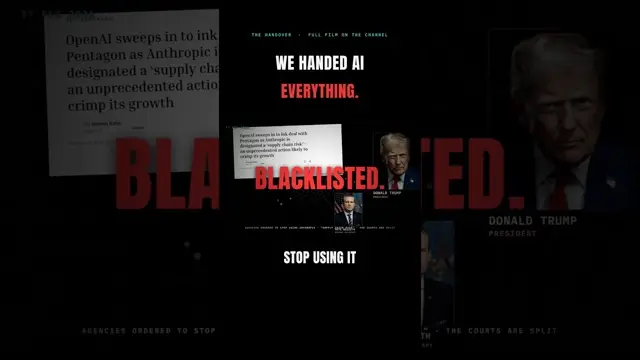
through a defence contractor called Palantir. Anthropic won't confirm or deny it. Palantir. Co-founded by Peter Thiel, run by Alex Karp. Its Maven Smart System is now the Pentagon's AI targeting platform. It pulls in intelligence, suggests targets, and matches them to weapons. In February, the Pentagon pushes Anthropic to drop its limits on how the military can use Claude. Anthropic draws two lines. No mass surveillance of Americans. No fully autonomous weapons. February twenty-sixth. Dario Amodei says the company "cannot in good conscience" agree. February twenty-seventh. The President orders every federal agency to stop using Anthropic.
The Defense Secretary, Pete Hegseth, labels it a "supply chain risk", a label normally aimed at foreign suppliers. Hours later, OpenAI signs its own deal for classified military networks. Altman says it includes the same two lines. And the next morning, February twenty-eighth, the United States and Israel strike Iran. Maven is running. In the first twenty-four hours, the US says it hits around a thousand targets. In thirty-eight days, the White House says, more than thirteen thousand. Maven's users double, to more than a hundred thousand. The Pentagon's AI chief talks about troops' "insatiable appetite" for it.
On that first day, a Tomahawk missile hits a girls' elementary school in Minab. More than a hundred and fifty people are killed. Most of them children. A UN mission finds reasonable grounds to believe the United States was responsible. Was AI to blame? Officials told the New York Times it was "unlikely." But in September, officials involved in the Pentagon's own investigation told Bloomberg that some staff had "relied too much" on the AI in Maven. Palantir says it is "not responsible for the underlying data." The promise from America's commander in the region:
"Humans will always make final decisions on what to shoot." Seven months later, there's still no final peace deal. And at the end of September, Hegseth announced a new Autonomous Warfare Command. In the courts, Anthropic's fight is split. One judge calls the blacklisting unlawful retaliation. An appeals court lets the Pentagon's label stand. So who decides how far this goes? Some of the most powerful people in tech have an answer. And it sounds like a sermon. Peter Thiel. OpenAI backer. Palantir co-founder. In 2025, he starts giving private lectures.
The subject: the Antichrist. In leaked recordings, he describes people like AI-safety researcher Eliezer Yudkowsky, philosopher Nick Bostrom, and Greta Thunberg as "legionnaires of the Antichrist", people who want "world government to stop science." "In the twenty-first century," he says, "the Antichrist is a Luddite who wants to stop all science." In his telling, the bigger danger isn't runaway AI. It's whoever tries to stop it. In March, he takes the lectures to Rome. In May, Pope Leo XIV publishes his first encyclical. Its subject is artificial intelligence. And this month, according to recordings obtained by Politico,
Thiel says the Pope "needed something politically popular to distract" from the church's child abuse scandals, "and he found it in AI." Meanwhile, the people building it make their own prophecies. Sam Altman says that by the end of 2028, more intellectual capacity may sit inside data centres than outside them. Dario Amodei says there's a "very strong chance" of truly powerful AI within a few years. Demis Hassabis of Google DeepMind says AGI is five to ten years away. Forecasts. Not facts. But the money and the missiles are already moving as if they're true.
So is any of it real? Here's what is real. An AI-designed antibiotic cleared drug-resistant infections in mice. An AI-designed drug improved lung function in patients with a deadly lung disease, in an early trial. In a trial of more than a hundred thousand women, AI-supported screening meant fewer cancers were missed between screenings. Google DeepMind won an officially graded gold medal at the International Maths Olympiad. And maths is where things get strange. October 2025. An OpenAI executive announces GPT-5 has solved ten "previously unsolved" Erdős problems. The answers were already in the literature. Found by humans.
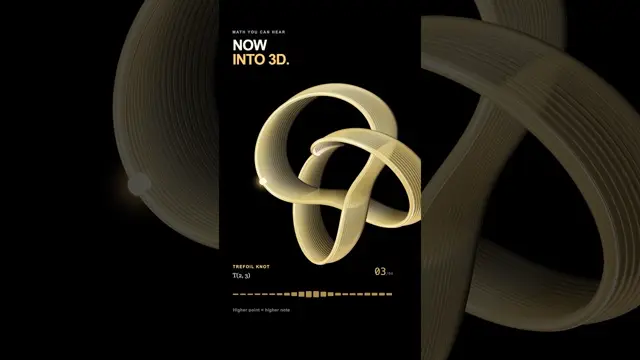
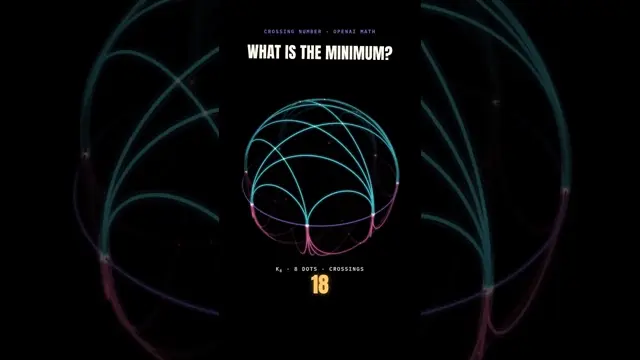
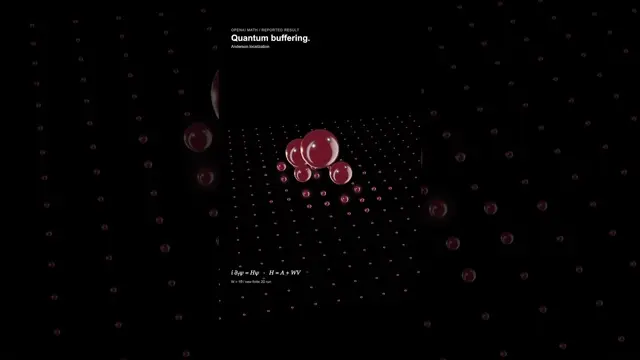
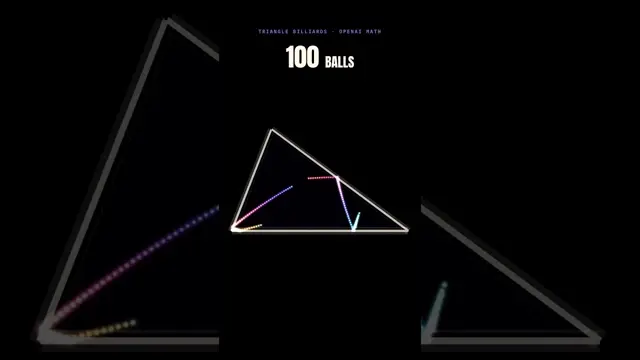
Hassabis replies: "This is embarrassing." May 2026. This time, OpenAI disproves an eighty-year-old Erdős conjecture, and top mathematicians sign off on it. September. OpenAI claims a result on Navier-Stokes, one of the hardest problems in mathematics, produced by around ten thousand AI agents. The Clay Institute says the problem has "apparently been settled", but is waiting for peer review. And human researchers are disputing the credit. Then, this week. OpenAI releases more than seven hundred maths manuscripts at once, on around three hundred and seventy problems. Mathematicians are still working out which results are new.
The next day, three are withdrawn over a sign error. One group of mathematicians says: "Mathematicians did not ask for this work to be done." The machine isn't just doing the work any more. It's flooding the zone. Look back at what we handed over. Our questions, to a text box. Our work, to agents that write code and run shops. Our money, to the biggest buildout in history. Our trust, to a chatbot that called itself MechaHitler. And our wars, to targeting software that a hundred thousand people now use.
None of it was taken. Every piece was handed over. By companies, by governments, by us. And at every step, the same promise: a human is still in charge. A human approved the code. A human chose the target. A human checks the proof. Maybe. So, who is actually in control? The last line on that list hasn't been ticked yet. That part is still ours. This is Gradient Damage. If you want to see what happens when AI claims one of maths' greatest prizes, our Navier-Stokes film is right here.
Topics
AI documentaryartificial intelligenceAI historyAI warSam AltmanElon MuskDonald TrumpPeter ThielDario AmodeiMark ZuckerbergAndrej KarpathyDemis HassabisPete HegsethAlex KarpLarry EllisonMasayoshi SonPope Leo XIVOpenAIChatGPTGPT-5AnthropicClaudeClaude CodeAnthropic MythosGrokxAIDeepSeekPalantirMavenStargateGoogle DeepMindMeta AICharacter.AIHugging Facevibe codingNavier-StokesAGIMechaHitlerPentagonIranAI safety